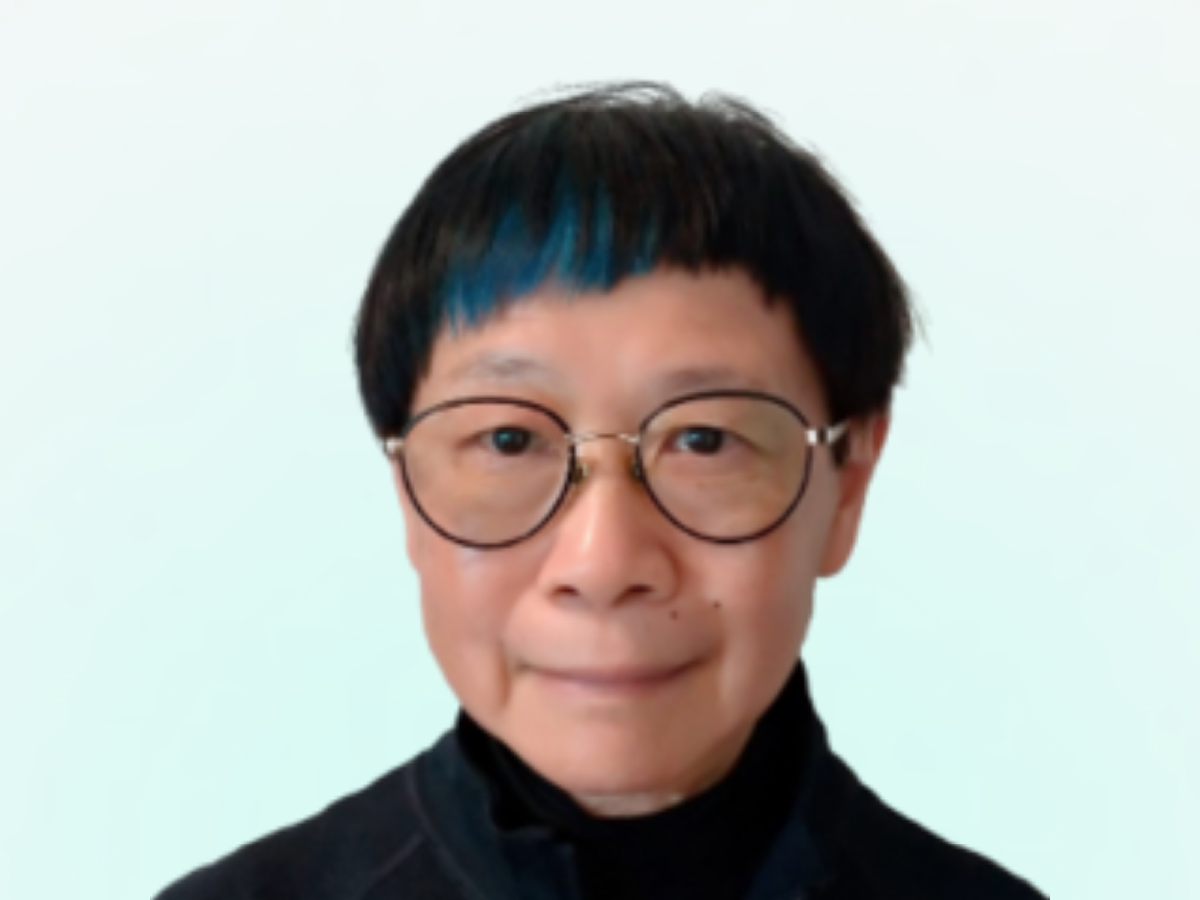
Daisy Shum

Daisy_Shum_People

Contact

L4-62, Laboratory Block, 
21 Sassoon Road, Hong Kong

T +852 3917 9171
F +852 2817 0857
shumdkhk@hku.hk

Research Interests

  • Differentiation of human iPCs into sensorimotor neurons for (i) disease modeling and (ii) commitment of glial progenitors to the Schwann cell fate
  • Neural development and regeneration: Impact on plasticity and behavioral outcome 

Biography

Professor Daisy K.Y. Shum obtained her M.Phil. and Ph.D. in Biochemistry in The University of Hong Kong. She received predoctoral training in biochemistry/ physiology of glycosaminoglycans in the University of Manchester and postdoctoral training in brain proteoglycans in New York University. She served as Visiting Professor at the University of Tübingen, Germany. She served as Acting Head of Biochemistry (for one year) and Professor of Biochemistry in the Li Ka Shing Faculty of Medicine, The University of Hong Kong. She was Secretary of the Hong Kong Society of Biochemistry and Molecular Biology, Secretary of The Hong Kong Society of Neurosciences, and committee member of International Brain Research Organization (IBRO). She served as External Examiner for MBBS, BDS, BSc, MSc, and PhD of overseas universities, and Chief Examiner/ Assessment Committee Member of the Royal Australasian College of Dental Surgeons. She also served as international program committee member of international congress/ symposium, reviewer of grants for several national research councils, and editor of several international scientific journals. Her research expertise in the proteoglycans has found relevance in cell migration, axonal guidance and plasticity of neural circuitry in both developing and injured neural systems. With the achievement of fate commitment in glial cells derived from human bone marrow stromal cells and iPSCs, new excitement is generated in the use of these cells towards post-traumatic regeneration of peripheral and central nervous systems.

Representative Publications

  1. Chen L.W., Wu K.L., Tam K.W., Ma C.W., Tsui Y.P., Lai C.H., Chan Y.S., Shum D.K.Y. (2025) Gliogenesis but not neurogenesis occurs during the acute phase of vestibular compensation after unilateral vestibular neurectomy.  IBRO Neuroscience Reports, 18: 690-697.  DOI: 10.1016/j.ibneur.2025.04.008.
  2. Hu X.Q., Wu K.L., Rong K.L., Ke Y., Yung W.H., Shum D.K.Y., Chan Y.S. (2025) Harnessing a non-canonical vestibular input to head-direction network rectifies age-related navigational deficits. Nature Aging, 5: 1079-1096.   DOI: 10.1038/s43587-025-00884-4.
  3. Shi W., Wu K.L., Yang M., Botelho F.P., Chua O.W., Hu H.J., Ng K.P., Lam U.T., Tam K.W., Ma C.W., Shum D.K.Y., Chan Y.S. (2025) Cannabinoid overrides triggers of GABAergic plasticity in vestibular circuits and distorts the development of navigation.  iScience, 28: 112566. DOI: 10.1016/j.isci.2025.112566.
  4. Jiang Q.F., Wu K.L., Hu X.Q., Cheung M.H., Chen W.Q., Ma C.W., Shum D.K.Y., Chan Y.S.  (2024) Neonatal GABAergic transmission primes vestibular gating of output for adult spatial navigation.    Cellular and Molecular Life Sciences, 81: 147.  DOI: 10.1007/s00018-024-05170-x.
  5. Kim H.W., Wu K.L., Tam K.W., Chan Y.S., Shum D.K.Y. (2024) Pericyte derivation and transplantation for blood-CNS barrier reconstitution in CNS disorders.  IBRO Neuroscience Reports, 16: 147-154. DOI: 10.1016/j.ibneur.2023.12.007.
  6. Tam K.W., Wong C.Y., Wu K.L., Lam G., Liang X., Wong W.T., Li M.T., Liu W.Y., Cai S., Shea G.K., Shum D.K.Y., Chan Y.S. (2023) iPSC-derived sensory neurons directing fate commitment of human BMSC-derived Schwann cells: applications in traumatic neural injuries. Cells, 12: 1479.  DOI: 10.3390/cells12111479.
  7. Liu J.A., Tam K.W., Chen Y.L., Feng X., Chan W.L., Lo A.L., Wu K.L., Hui M.N., Wu M.H., Chan K.K., Cheung M.P., Cheung C.W., Shum D.K.Y., Chan Y.S., Cheung M. (2023) Transplanting human neural stem cells with ~50% reduction of SOX9 gene dosage promotes tissue repair and functional recovery from severe spinal cord injury.   Advanced Science, 2205804.  DOI: 10.1002/advs.202205804
  8. Lai S.K., Wu K.L., Ma C.W., Ng K.P., Hu X., Tam K.W., Yung W.H., Wang Y.T., Wong T.P., Shum D.K.Y., Chan Y.S. (2023) Timely insertion of AMPA receptor in the vestibular circuit is required for manifestation of righting reflexes and navigational performance. Progress in Neurobiology, 221: 102402. DOI: 10.1016/j.pneurobio.2023.102402.
  9. Tsui Y.P., Lam G., Wu K.L., Li M.T.S., Tam K.W., Shum D.K.Y., Chan Y.S. (2021) Derivation of oligodendrocyte precursors from adult bone marrow stromal cells for remyelination therapy.  Cells, 10: 2166. DOI: 10.3390/cells10082166.
  10. Shea G.K., Tai E.W., Leung K.H., Mung A.K., Li M.T., Tsui A.Y., Tam A.K., Shum D.K.Y., Chan Y.S. (2020) Juxtacrine signalling via Notch and ErbB receptors in the switch to fate commitment of bone marrow-derived Schwann cells.  European Journal of Neuroscience, 52: 3306-3321. DOI: 10.1111/ejn.14837.
  11. Tsui A.Y., Shea G.K., Chan Y.S., Shum D.K.Y. (2018) Derivation of fate-committed Schwann cells from bone marrow stromal cells of adult rats.   Methods in Molecular Biology Series, 1739: 137-148.   DOI: 10.1007/978-1-4939-7649-2_9.
  12. Lau Y.T., Kwok L.F., Tam K.W., Chan Y.S., Shum D.K.Y., Shea G.K. (2018) Genipin-treated chitosan nanofibers as a novel scaffold for nerve guidance channel design.  Colloids and Surfaces B: Biointerfaces, 162: 126-134. DOI: 10.1016/j.colsurfb.2017.11.061.
  13. Cai S., Tsui Y.P., Tam K.W., Shea G.K., Chang R.S., Ao Q., Shum D.K.Y., Chan Y.S. (2017)  Directed differentiation of human bone marrow stromal cells to fate-committed Schwann cells.   Stem Cell Reports, 9: 1097-1108.   DOI: 10.1016/j.stemcr.2017.08.004.
  14. Cai S., Han L., Ao Q., Chan Y.S., Shum D.K.Y. (2017)  Human induced pluripotent stem cell-derived sensory neurons for fate commitment of bone marrow-derived Schwann cells: Implications for re-myelination therapy.  Stem Cells Translational Medicine, 6: 369-381.    DOI: 10.5966/sctm.2015-0424.
  15. Mung K.L., Tsui Y.P., Tai E.W., Chan Y.S., Shum D.K.Y., Shea G.K. (2016) Rapid and efficient generation of neural progenitors from adult bone marrow stromal cells by hypoxic preconditioning. Stem Cell Research and Therapy, 7: 146.   DOI: 10.1186/s13287-016-0409-x.
  16. Kwok J.C., Yuen Y.L., Lau W.K., Zhang F.X., Fawcett J.W., Chan Y.S., Shum D.K.Y. (2012) Chondroitin sulfates in the developing rat hindbrain confine commissural projections of vestibular nuclear neurons. Neural Development, 7: 6.  DOI: 10.1186/1749-8104-7-6.
  17. Ao Q., Fung C.K., Tsui A.Y., Cai S., Zuo H.C., Chan Y.S., Shum D.K.Y. (2011) The regeneration of transected sciatic nerves of adult rats using chitosan nerve conduits seeded with bone marrow stromal cell-derived Schwann cells. Biomaterials, 32: 787-796. DOI: 10.1016/j.biomaterials.2010.09.046.
  18. Shea G.K., Tsui Y.P., Chan Y.S., Shum D.K.Y.  (2010) Bone marrow-derived Schwann cells achieve fate commitment – a prerequisite for remyelination therapy.   Experimental Neurology, 224: 448-458.   DOI: 10.1016/j.expneurol.2010.05.005.
  19. Liu J., Chau C.H., Liu H.Y., Jang B.R., Li X.G., Chan Y.S., Shum D.K.Y. (2006) Upregulated chondroitin 6-sulphotransferase-1 facilitates Schwann cell migration during axonal growth.   Journal of Cell Science, 119: 933-942.  DOI: 10.1242/jcs.02796.
  20. Zhang Y., Yeung M.N., Liu J., Chau C.H., Chan Y.S., Shum D.K.Y. (2006) Mapping heparanase expression in the spinal cord of adult rats.  Journal of Comparative Neurology, 494: 345-357. doi: 10.1002/cne.20811.

Last Update : 2026-03-06